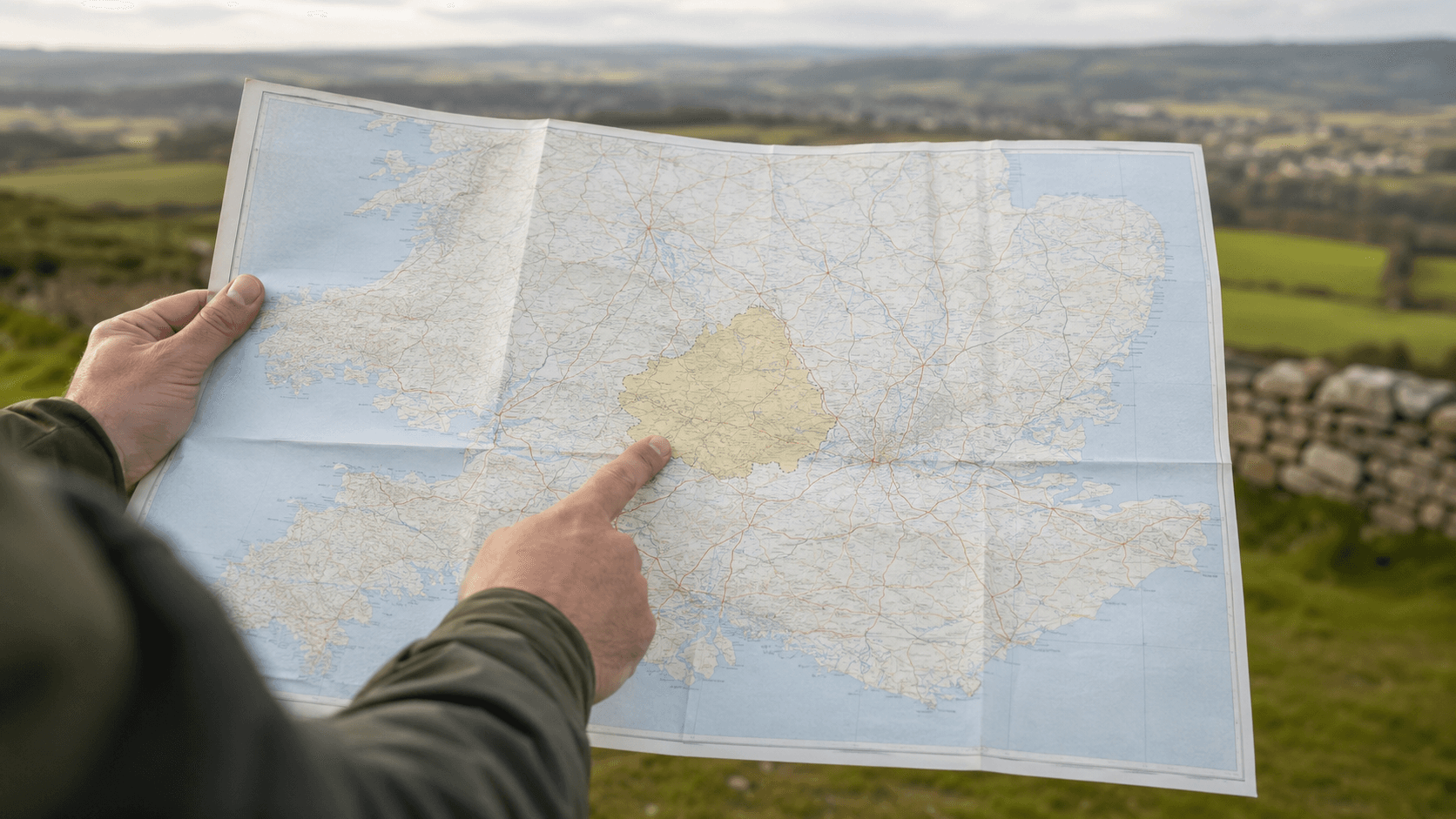
.png&w=1080&q=75)
 Photo: mattbuck, CC BY-SA 3.0
Getting Around
Visiting the Cotswolds Without a Car: What Actually Works
Yes, you can visit the Cotswolds without a car. Trains connect several useful towns and gateways to London, Oxford, Birmingham, Bristol and Bath, while local buses reach a number of popular Cotswold towns and villages. The catch is that the Cotswolds covers a large rural area, and public transport is much easier in some parts than others.
The key to a successful car-free trip is choosing the right base. Stay somewhere with a railway station or useful bus connections, concentrate on one part of the region, and check your return journey before setting out.
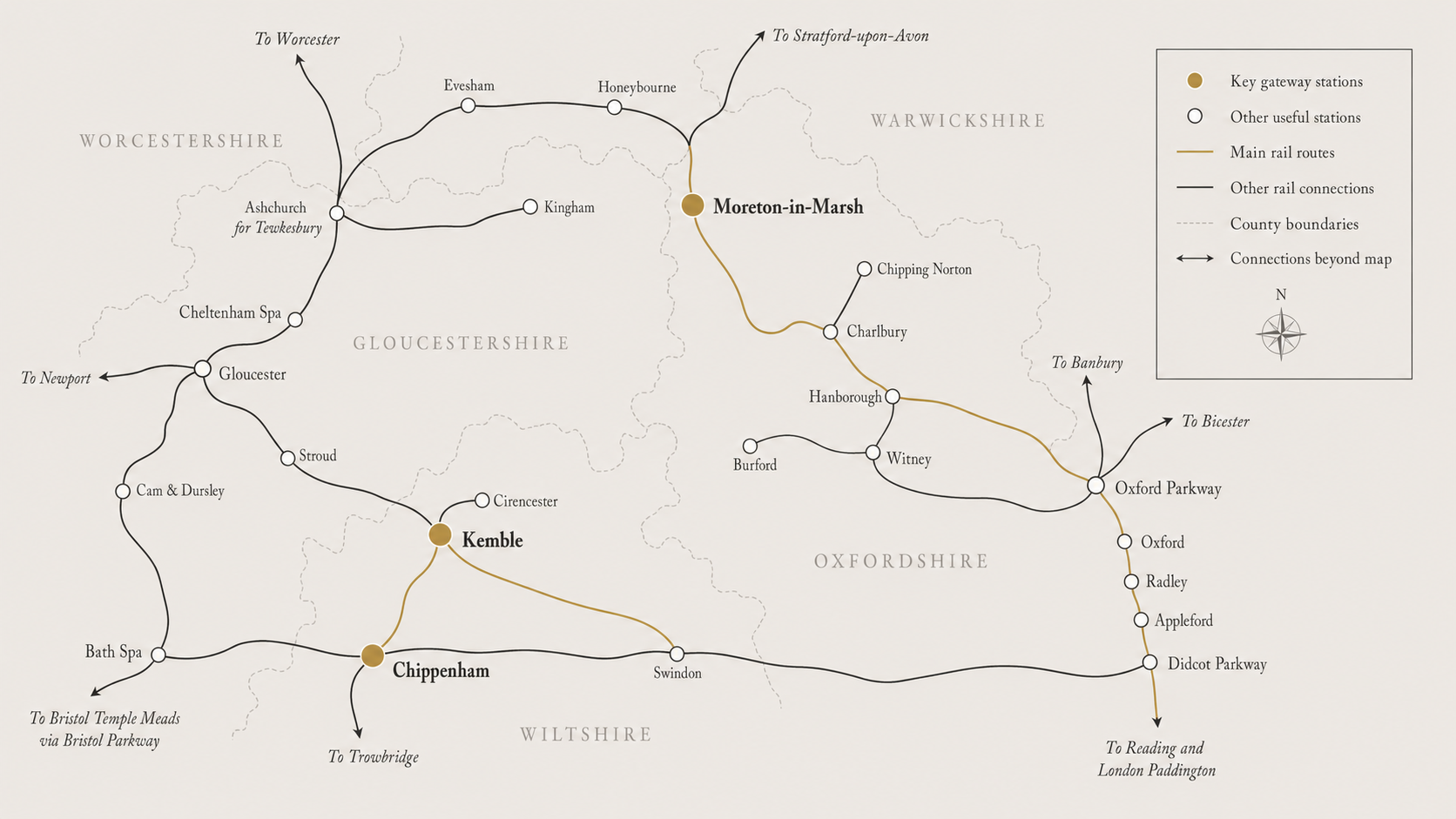
Moreton-in-Marsh is one of the most practical bases for exploring the northern Cotswolds without driving. Other rail gateways, including Kemble, Stroud and Charlbury, can work well for different trips, but arriving at a station does not necessarily mean the villages you want to visit are within walking distance.
The short answer: visiting the Cotswolds without a car is entirely possible, but it works best when you plan the trip around public transport rather than choosing a list of villages first and trying to connect them afterwards.
The Cotswolds without a car at a glance
| Question | Answer |
|---|---|
| Can you visit the Cotswolds without a car? | Yes, particularly if you stay near a useful railway station or bus route |
| What is the best base without a car? | Moreton-in-Marsh is one of the easiest options for the northern Cotswolds |
| Can you get around by train? | Partly. Several towns and gateways have stations, but many famous villages do not |
| Are there buses in the Cotswolds? | Yes. Local services connect a number of towns and villages, but frequency varies |
| Can you visit Cotswold villages without a car? | Yes, although some are considerably easier than others |
| Do you need a car for the Cotswolds? | No, but a car gives considerably more flexibility in rural areas |
| Is a car-free Cotswolds day trip possible? | Yes, if you choose a compact route with reliable connections |
Do you need a car to visit the Cotswolds?
No, but whether you will wish you had one depends on the type of trip you are planning.
The Cotswolds is not one destination with a central transport network. The protected landscape covers approximately 790 square miles, and many of its best-known villages are small rural settlements without railway stations.
Public transport works best when you:
- choose one part of the Cotswolds
- stay somewhere with good connections
- build each day around existing routes
- allow time between connections
- check the final service back to your accommodation
It works less well if you begin with a wish list of widely separated villages and expect to move freely between them.
This is the main difference between travelling around the Cotswolds by car and using public transport. A driver can change plans during the day. Without a car, the timetable becomes part of the itinerary.
That does not necessarily make for a worse trip. Staying in one area and spending longer in fewer places can be a better way to experience the Cotswolds than driving from village to village simply to see as many as possible.
Where can you get to the Cotswolds by train?
There is no station called the Cotswolds.
Instead, railway lines serve different parts of the region. Great Western Railway identifies two main rail corridors through and around the Cotswolds, with direct connections available from London Paddington and Reading and services from Bristol and Bath Spa towards the south.
Some of the most useful stations for a car-free visit include:
| Station | Useful for | What to know |
|---|---|---|
| Moreton-in-Marsh | Northern Cotswolds | You arrive directly in a Cotswold market town with onward bus connections |
| Kingham | Eastern Cotswolds | Useful for a quieter rural stay, but onward options need checking carefully |
| Charlbury | Eastern Cotswolds | A Cotswold town with its own railway station |
| Kemble | Cirencester and central Cotswolds | Cirencester requires an onward bus or taxi |
| Stroud | Western Cotswolds | A useful base with rail and bus connections |
| Cheltenham Spa | Access to the western and northern Cotswolds | The town centre itself is largely outside the National Landscape, but it functions as a transport gateway |
GWR also lists stations including Hanborough and others serving different parts of the wider region.
The best station is therefore not the one closest to the geographical centre of the Cotswolds. It is the one with the most useful onward connections for your particular trip.
Is Moreton-in-Marsh the best place to stay without a car?
For many first-time visitors, Moreton-in-Marsh is one of the simplest places to consider.
It has its own railway station, including direct services from London Paddington, and buses connect it with several northern Cotswold destinations. The official regional transport information currently lists bus connections from Moreton-in-Marsh towards Chipping Campden, while GWR highlights the Rail Link 801 service for destinations including Stow-on-the-Wold and Bourton-on-the-Water.
That gives Moreton an important advantage: you can arrive by train, stay in the town and make some onward journeys without needing a taxi for every trip.
It is not automatically the best base for everyone.
If your priority is Bibury, Cirencester or the southern Cotswolds, staying in Moreton-in-Marsh could mean travelling in the wrong direction before you have even started your day.
The best car-free base depends on which part of the Cotswolds you actually want to experience.
Other places to consider for a car-free stay

Stroud
Stroud has a railway station and a bus network connecting it with surrounding areas. Stagecoach currently lists connections between Stroud and Cheltenham via Painswick, as well as wider regional services.
It can be a practical choice if your interests lie in the western Cotswolds rather than the famous northern village circuit.
Cirencester
Cirencester does not have its own railway station, but it is a significant bus hub and can be reached from Kemble station by onward transport. Regional bus services also connect Cirencester with other towns and villages.
Its size means there is more to do within the town itself than in many small villages, which can be useful when you do not have a car available for spontaneous trips elsewhere.
However, staying in Cirencester still requires planning if your main aim is to visit multiple rural villages.
Charlbury
Charlbury has its own railway station and places you directly within the eastern Cotswolds.
It can suit visitors who prefer a quieter stay and are happy to build their trip around walking, rail travel and a smaller geographical area.
It is less useful if your aim is to tick off the famous northern Gloucestershire villages.
Cheltenham
Cheltenham is not, strictly speaking, a Cotswold town centre, but it is a useful transport base immediately beside the protected landscape.
It has stronger rail and bus connections than most rural Cotswold locations. Stagecoach currently lists direct or through services from Cheltenham towards Cirencester, Oxford, Stroud and other regional destinations.
The trade-off is obvious: you are staying in a larger town outside the core rural landscape rather than waking up in a small Cotswold village.
Our view: if this is your first car-free visit and seeing the northern villages is the priority, start by investigating Moreton-in-Marsh. If you are more interested in the western, central or eastern Cotswolds, choose a base in that area rather than spending each day travelling north.

Can you get around the Cotswolds by bus?
Yes, but this is where careful planning becomes important.
Several operators run scheduled routes connecting Cotswold towns and villages. The official regional tourism site maintains information on local bus services, while operators publish current timetables directly.
Examples of useful current connections include:
- Moreton-in-Marsh towards Chipping Campden
- Moreton-in-Marsh towards Stow-on-the-Wold and Bourton-on-the-Water via the Rail Link 801
- Bourton-on-the-Water, Northleach, Bibury and Cirencester via Pulhams service 855
- Cheltenham towards Cirencester and Stroud via Stagecoach services
These examples show that a car-free trip can reach considerably further than the railway map alone suggests.
However, a bus route existing does not automatically make a journey convenient.
Before relying on any service, check:
- how frequently it runs
- whether it operates every day
- the final return service
- Sunday and bank holiday schedules
- whether a missed connection would leave you waiting for a long period
- whether the stop is actually close to the place you want to visit

This is especially important in a rural region where an alternative bus may not arrive ten minutes later.
Do not use the route numbers in this guide as a permanent timetable. They were checked in July 2026 and can change. Always confirm your journey directly with the operator before travelling.
Which Cotswold villages can you visit without a car?
Some well-known destinations are considerably easier than others.
Moreton-in-Marsh
The simplest of the obvious options because it has its own railway station. You can arrive and explore the town without needing an onward connection.
Stow-on-the-Wold
Accessible by bus from the Moreton-in-Marsh direction, making it a realistic option for a car-free northern Cotswolds trip.
Bourton-on-the-Water
Also served by bus connections from the northern Cotswolds and connected southwards towards Northleach and Cirencester on current services.
Chipping Campden
The official Cotswolds transport guide recommends travelling by train to Moreton-in-Marsh and continuing by bus, with the bus journey listed at approximately 30 minutes.
Bibury
Possible without a car, but less straightforward than the northern cluster. Pulhams currently operates service 855 linking Bibury with Cirencester, Northleach and Bourton-on-the-Water.
This makes Bibury accessible by public transport, but your entire day's connections need to work rather than simply the journey there.
Castle Combe
Castle Combe is a good example of a famous Cotswold village that requires more planning without a car. It has no railway station, and its location in the southern Cotswolds means the northern rail-and-bus network around Moreton-in-Marsh is irrelevant.
If Castle Combe is a priority, plan your trip specifically around the southern Cotswolds rather than trying to add it to a northern car-free itinerary.
The easiest mistake to make
The most common planning mistake is assuming that because two villages are famous, they must be easy to combine.
They may not be.
A route such as Moreton-in-Marsh to Stow-on-the-Wold to Bourton-on-the-Water follows a relatively logical northern Cotswolds corridor with current public transport connections.
Trying to add Bibury and then Castle Combe creates a completely different journey across a large part of the region.
This matters even more without a car.
When planning a car-free trip, ignore generic lists of the "ten prettiest Cotswold villages" until you have checked where those villages actually are.
Choose a geographical cluster first.
Then decide what is worth seeing within it.
Can you explore the Cotswolds on foot?
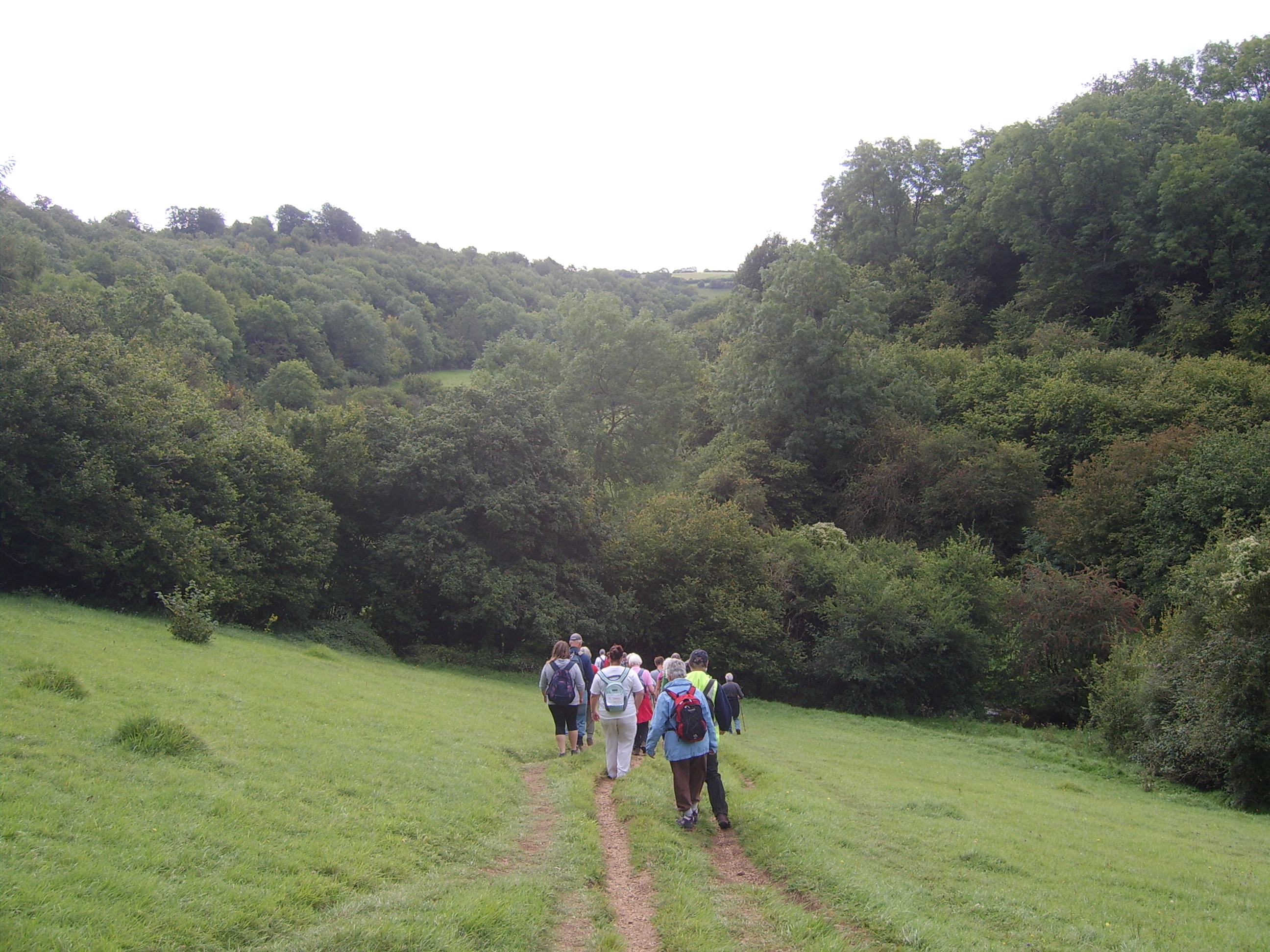
Walking can form part of a car-free trip, but it should not be treated as a substitute for transport across the whole region.
The Cotswolds has an extensive network of public rights of way and long-distance routes, including the Cotswold Way. Walking between nearby towns and villages can create a much more interesting day than waiting for multiple bus connections.

However, distances, terrain and daylight need to be taken seriously. A route that appears short by road may involve a considerably longer public footpath.
For visitors planning a walking-led trip, the most useful approach is often:
- train to a suitable base → walk a planned route → return by bus or train
- or the reverse.
Always check the route itself rather than assuming that two neighbouring villages have a convenient pedestrian connection.
What about taxis?
Taxis are useful for filling gaps in a car-free itinerary, particularly between a railway station and accommodation or for reaching a village without a practical bus connection.
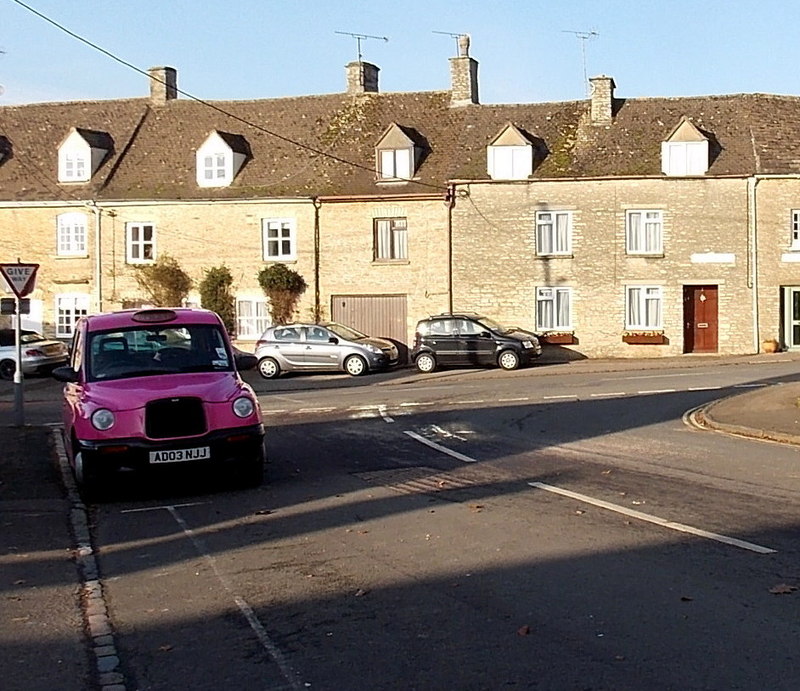
The limitation is availability.
Uber's app lists coverage in Cheltenham, Stroud and Cirencester, but real availability is inconsistent. Do not count on finding a car at short notice even in those towns. In smaller Cotswold villages and market towns such as Moreton-in-Marsh, Stow-on-the-Wold, Bourton-on-the-Water, Chipping Campden and Bibury, Uber does not operate at all. A pre-booked local taxi firm is the reliable option throughout the region, not an app.
In rural areas, you should not assume you will be able to open an app and immediately find a car. For important journeys, particularly evening returns or station transfers, booking in advance is sensible.
A trip that uses trains and buses for the main journeys with one or two pre-booked taxis can still be significantly easier than hiring a car for the entire stay.
Is a car-free Cotswolds day trip possible?
Yes.
The simplest options are usually built around one railway gateway and a small number of reliable onward connections.
A good car-free day does not need to contain five villages.
For example, arriving in a rail-connected town, visiting one nearby destination by bus and returning with plenty of time for the train home is likely to feel more relaxed than attempting to coordinate multiple rural connections.
If you are travelling from London specifically, read our separate guide to getting from London to the Cotswolds, which compares the main rail gateways with driving.
For a car-free day trip, always work backwards from the last reliable journey home before deciding what you can fit into the day.
When does an organised tour make more sense?
An organised tour can be a sensible choice if:
- you have only one day
- seeing several famous villages is important to you
- you do not want to coordinate buses
- your chosen destinations are poorly connected
- you want to avoid hiring a car
The downside is less control over how long you spend in each place and when you visit.
For independent travellers staying several days, using a well-connected base and public transport may offer considerably more freedom.
For a first-time visitor with six hours and a long list of rural villages, a tour may simply be the more practical option.
Our advice for visiting the Cotswolds without a car
The Cotswolds is entirely visitable without driving, but you need to plan a different kind of trip.
Rather than asking:
How do I get to all the famous villages?
Start with:
Which part of the Cotswolds works best for me without a car?
Choose a base with useful connections. Explore one area properly. Use trains for longer journeys, buses where the timetable works, walking where the route makes sense and taxis selectively where they solve a genuine gap.
Most importantly, check the return journey.
The freedom of having a car is difficult to replicate in a rural area. But not having one does not prevent you from experiencing the Cotswolds. It simply makes where you stay and how much you try to see more important.
Frequently asked questions
Can you visit the Cotswolds without a car?
Yes. Trains reach several useful Cotswold towns and gateways, while local buses connect a number of popular destinations. A successful car-free trip depends on choosing a well-connected base and concentrating on one part of the region.
Where should I stay in the Cotswolds without a car?
Moreton-in-Marsh is one of the most practical options for the northern Cotswolds because it has a railway station and onward bus connections. Stroud, Charlbury and other rail-connected locations can suit different parts of the region.
Can you get around the Cotswolds by public transport?
Yes, although coverage and frequency vary. Trains serve several towns and gateways, and local buses connect a number of villages. Check individual journeys and return times before travelling.
What is the easiest Cotswold village to reach by train?
Moreton-in-Marsh is one of the easiest well-known Cotswold destinations to reach because the railway station is in the town itself. Other rail-connected Cotswold locations include Charlbury and Stroud.
Can you visit Bibury without a car?
Yes. Current Pulhams service 855 connects Bibury with Cirencester, Northleach and Bourton-on-the-Water. The frequency and operating days should be checked before planning your visit.
Is it better to hire a car in the Cotswolds?
A car provides more flexibility, particularly for small rural villages and attractions away from bus routes. It is not essential if you are willing to choose a well-connected base and plan your destinations around trains and buses.
Sources and editorial method
Public transport information was checked against current information from Great Western Railway, Stagecoach, Pulhams and regional visitor information in July 2026. Bus routes and timetables can change, so this guide focuses on the structure of a car-free visit rather than attempting to reproduce complete timetables.
Visit Cotswolds is an independent guide. Recommendations about where a car-free trip works best are based on verified transport connections and the geography of the region. Where a route has not been personally travelled by the editor, it is not presented as personally tested.
Always check live timetables with the relevant operator before travelling.
Last fact-checked: July 2026