When To Visit Stow-on-the-Wold
Summer weekends and coach tour season bring real parking pressure into the square and surrounding streets. Weekday mornings and the shoulder seasons either side of summer are the more reliable quiet windows.

“The highest town in the Cotswolds, and one of the busiest.”
The square is the main reason people visit. It has been trading since 1107, when Henry I granted the market charter, and by the town's wool-trade peak, contemporary accounts put as many as 20,000 sheep changing hands here in a day. Look for the narrow, high-walled alleyways leading off the square. They are called tures, and they existed for one reason: funnelling sheep from the surrounding fields into the market without them scattering through the town. At one end of the square stand the old town stocks, a 15th-century wooden frame once used to publicly punish minor offenders, restored by the council and back in place as of this year.
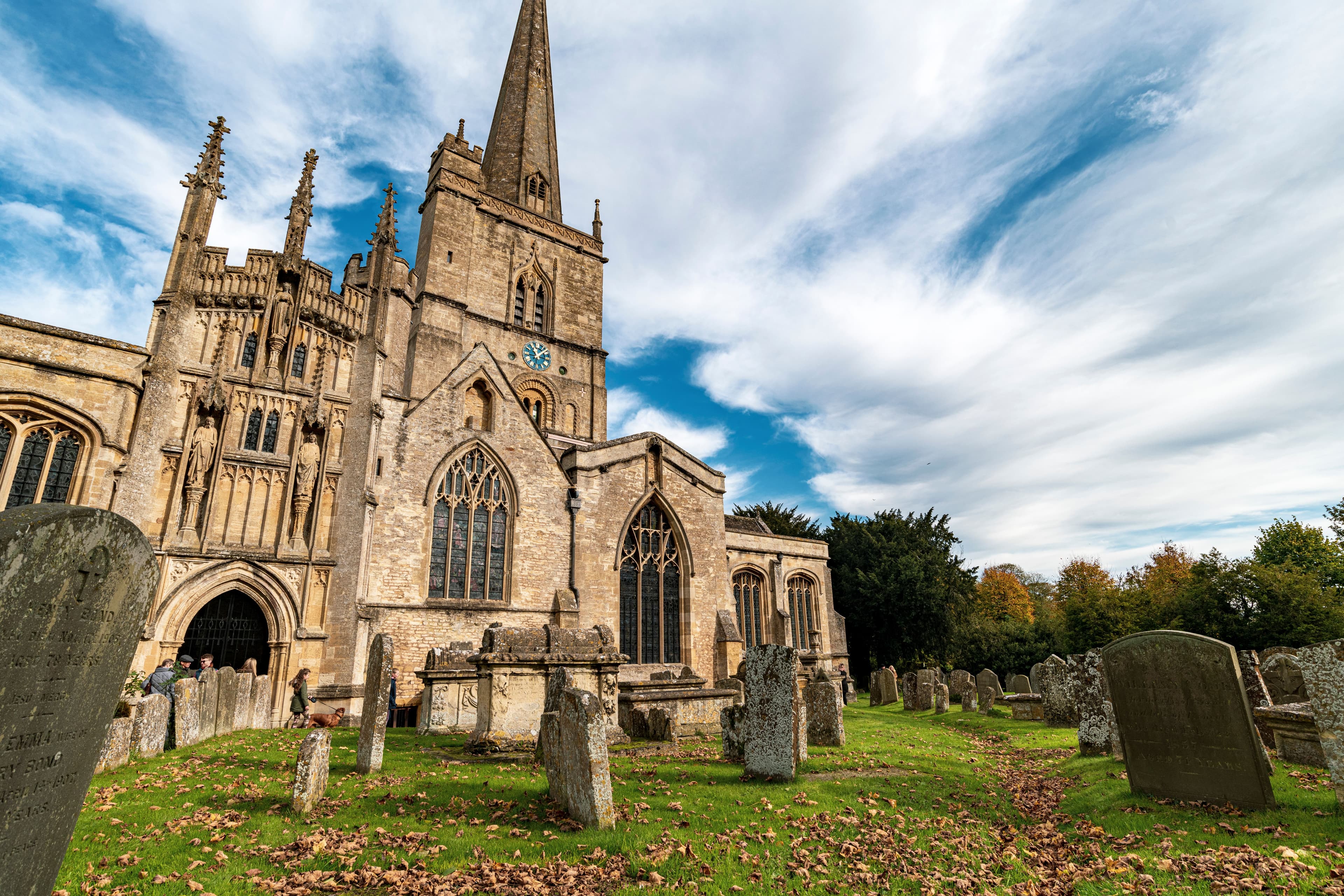
Two things anchor a visit here beyond the square itself. St Edward's Church sits a short walk away, and its north door has become something of a pilgrimage stop for a specific kind of visitor. It is flanked by two ancient yew trees, and local legend holds that it inspired Tolkien's Doors of Durin, the gates of Moria, in Lord of the Rings. FYI there is no solid documentary evidence Tolkien ever wrote about the door, but still a fun stop for fantasy enthusiasts. That does not stop it being genuinely atmospheric, or stop people queuing for the photo in summer.
The other layer to Stow's history is less whimsical. The last pitched battle of the First English Civil War was fought just north of the town on 21 March 1646. The Royalist commander, cornered and beaten, is said to have told his captors: "You have now done your work, boys, and may go play, unless you will fall out amongst yourselves." Within weeks the King had surrendered.
Stow splits opinion more than most Cotswold stops. It is touristy, more commercial than somewhere like Castle Combe, and one visitor review calls the pricing in the antique shops out of step with the town's charm. Others rate it as the best base for exploring the wider region, and geographically, they have a point. It sits close to the middle of things.

Summer weekends and coach tour season bring real parking pressure into the square and surrounding streets. Weekday mornings and the shoulder seasons either side of summer are the more reliable quiet windows.
Practical insights from our visits: the kind of advice you would get from someone who has been there recently.
The old rhyme, Stow-on-the-Wold, where the wind blows cold, is not just a saying. Stow sits exposed on a hilltop, so bring a layer even on a warm forecast.
A farmers market runs every second Thursday of the month in the square, worth timing a visit around if you want the town at its most local rather than its most touristy.
The high-walled tures off the square are easy to walk straight past. They are the clearest physical trace left of the old sheep trade.
Coach parties concentrate around the square in peak season. Arrive before 10am if you want it to yourself for even ten minutes.
The 15th-century stocks at one end of the square were removed for repair and, per council plans, restored by Easter 2026. Worth a look, they are one of the few genuinely medieval objects still standing in daily use as a photo stop rather than behind glass.

Fosseway Car Park, Stow-on-the-Wold. Pay-and-display machines accept card and coins. A further free long-stay car park sits by Tesco, a short walk from the town centre.
Main Car Park
Fosseway Car Park, Stow-on-the-Wold
Fosseway Car Park is free, with 96 standard bays and 3 disabled bays, open seven days a week including overnight.
Overflow Field
A further free long-stay car park sits by Tesco, a short walk from the town centre.
On-Street (Not Recommended)
Limited free spaces exist directly in the square, but restricted to a 2-hour stay, useful for a quick stop rather than a full visit.
By Rail
Stow-on-the-Wold doesn't have its own railway station. The nearest are Moreton-in-Marsh, about 4 miles away, and Kingham, about 8 miles away, both on the Cotswold Line with direct services to London Paddington. Pulhams Coaches runs a bus link from Moreton-in-Marsh into Stow roughly hourly. A taxi from Moreton-in-Marsh station takes around 7 minutes and costs roughly £18 to £22.
Parking
Fosseway Car Park is free, with 98 standard bays and 3 disabled bays, open every day including overnight. A further free long-stay car park sits by Tesco. Limited free spaces directly in the square are capped at 2 hours.
Partially accessible.
Mostly. Some uneven floor can be expected.
The market square is moderately flat and wide.
Pavement and older stone thresholds, typical of a Cotswold market town centre.
A quick read on how Stow-on-the-Wold stacks up against other popular Cotswolds villages, based on our visits, not brochure copy.


Stow-on-the-Wold is not the only option. If your priorities run differently, these villages may suit you better.
Try Castle Combe.
Try Bourton-on-the-Water.
Trip-planning suggestions based on driving times from Stow-on-the-Wold. Adjust for your pace. We prefer one village properly over three rushed.

Half Day
Stow-on-the-Wold + Bourton-on-the-Water
Antiques and the square in Stow, then the river green and shops in Bourton. About 4 miles apart.
March starts quiet. By April, blossom is out along hedgerows and orchards, and the light has that clear, low quality photographers chase. Lambing season means new arrivals in the fields either side of the roads. Weather is unpredictable though, expect a mix of bright mornings and sudden showers, so bring layers either way. Crowds build steadily from Easter, and the two spring bank holidays are the first genuinely busy weekends of the year.
This is peak season, no way round it. July and August weekends are when car parks fill fastest and popular spots feel their busiest, particularly late morning through mid afternoon. Daylight lasts until nearly 9.30pm at midsummer, which works in your favour if you are happy exploring early or late to dodge the crowds. Weekdays outside school holidays are a noticeably calmer version of the same places.
September is often the best-kept secret of the year. Crowds thin considerably once schools go back, but the weather is frequently still warm enough for a proper day out. Foliage turns from mid-October, stone and copper leaves together, and mornings can be genuinely misty in a way that photographs beautifully. Some seasonal attractions reduce their hours or close after October half term, so it is worth checking before you plan a day around one.
The quietest season, and for some the best one. Days are short, dark by mid-afternoon, so plan accordingly if you are relying on daylight for walking or photography. Rural roads can be icy or waterlogged after rain, worth checking conditions before setting out rather than assuming they will be clear. What you get in return is empty lanes, log fires, and villages without a single coach in sight. A number of smaller cafes and shops reduce their hours or close for a break in January, so do not assume everywhere will be open.
Answers based on our visits and the questions visitors search for most often.
Yes, particularly if you want one proper market town to anchor a Cotswolds trip around rather than another small village. It has more shops, more places to eat, and more genuine history attached to it than most of the smaller stops. It is also more commercial and touristy than somewhere like Castle Combe, so go in with that expectation rather than picturing something quiet and undiscovered.
It has a reputation for it, particularly the antique shops around the square. Prices at the pubs and restaurants are broadly in line with other popular Cotswold towns, but Stow specifically feels pricier than its neighbours. Budget accordingly if antiques are part of the plan.
No. The nearest stations are Moreton-in-Marsh, about 4 miles away, and Kingham, about 8 miles away, both on the Cotswold Line with direct trains to London Paddington. A bus service and private taxis connect Moreton-in-Marsh to Stow.
It is a well-loved local story rather than a confirmed fact. The church's north door is flanked by two ancient yew trees and does resemble descriptions of the Doors of Durin from Lord of the Rings, and Tolkien is known to have visited the Cotswolds. But there is no documented evidence he ever wrote about this specific door, so treat the connection as atmospheric rather than proven.
Weekday mornings, outside school holidays, if you want to avoid the coach parties. The town sits exposed on a hilltop, so even a warm forecast is worth pairing with a layer, locals have a rhyme about it for a reason.
Fosseway Car Park is free for 2 hours, with 98 standard bays and 3 disabled bays, open every day including overnight. There is also a free long-stay option by Tesco. The limited free spaces directly in the square are capped at 2 hours, fine for a quick stop, but not for a full visit.