.png&w=1080&q=75)
 Michael Garlick / Geograph, CC BY-SA 2.0, via Wikimedia Commons
Attractions
Hidcote Garden: What to Expect Before You Visit
Hidcote Manor Garden is one of the most significant gardens in England, and one of the most visited National Trust properties in the Cotswolds. Whether you're a serious gardener or simply looking for somewhere to spend a half-day in the North Cotswolds, it earns its reputation. This guide covers what the garden is actually like, what to prioritise on a first visit, when to go, and what to pair it with nearby.
What is Hidcote Manor Garden?
Hidcote is a 10.5-acre Arts and Crafts garden near Chipping Campden in Gloucestershire, created by Major Lawrence Johnston between 1907 and 1948 and now managed by the National Trust. It is structured as a series of around 30 distinct outdoor "rooms", each enclosed by hedges of yew, hornbeam, and beech, each with its own planting character, colour palette, and atmosphere.
The significance of Hidcote is hard to overstate without sounding like a brochure, so here is a concrete version: Johnston gifted it to the National Trust in 1948, making it the first garden taken on by the Trust solely for the importance of its garden rather than its house. Before Hidcote, the National Trust was interested in buildings. The garden effectively changed what the organisation thought was worth preserving.
Johnston himself is an unusual figure in garden history. American by birth, he became a naturalised British subject and fought in the Boer War, where an interest in South African flora first took hold. With no formal horticultural training, he spent four decades assembling one of the most influential garden designs in Britain, funding plant hunting expeditions to China, South Africa, and the Alps, and incorporating species from those trips into the garden's rooms. Several plants now common in British gardens were introduced or popularised through Hidcote, including Lavandula angustifolia 'Hidcote' and Penstemon 'Hidcote Pink'.
What to see at Hidcote Manor Garden
Hidcote Manor Garden contains around 30 distinct garden rooms, each with its own planting character, arranged along two central axes running east-west and north-south. There is no fixed route through the garden (that is part of the appeal), but it also means first-timers can feel slightly directionless. The National Trust has introduced a digital map accessible by QR code at Visitor Reception, which helps considerably. The short version of what to prioritise:
The Old Garden
Immediately in front of the manor house and usually where visitors begin. One of the most formal areas, with strong structure and bold colour: red roses, irises, peonies depending on season. Good first impression.

The Red Borders and Gazebos
These form a crossing point in the garden's central axis. The gazebos are worth knowing about: they were developed while Johnston was recovering from a First World War injury, and the North Gazebo retains his original hand-painted ceiling decoration. One of the few interior details visitors can actually see.

The Bathing Pool
Central and practical: it was intended to be used as exactly that, and archive photographs show Johnston's friends and family swimming in it. The centrepiece statue was likely inspired by Thomas Mawson's garden design manual, which Johnston used extensively.

The Long Walk
The main east-west axis: a wide grass avenue running between clipped beech hedges, with long views over the Vale of Evesham at the far end. That is the moment most people photograph. It is also the clearest illustration of how Hidcote works. The enclosed rooms give way to a sudden, sweeping openness that makes the whole thing feel much larger than 10.5 acres.
The Wilderness
The furthest point from the house and the most naturalistic. After the structured formality of the garden rooms, it feels markedly different. Less clipped, more open, with long views. Visitors who run out of time tend to miss this area. Worth making the effort.
The Plant Shop
Widely mentioned in reviews, and not just as a throwaway note. Regulars consider it one of the better National Trust plant centres, stocking specialist varieties that connect directly to what's growing in the garden. Budget time for it.
Best time to visit Hidcote Garden
The best time to visit Hidcote Garden is late May to early July, when the Red Borders and rose garden are at their peak and the garden is at its most colourful. That said, Hidcote is worth visiting in any season. The experience varies considerably depending on when you go.
Spring (March to May) brings tulips, early perennials, wisteria, and fresh structure: the hedges are clean and sharply defined before summer growth softens them. Bluebells appear in the wilder areas. Fewer visitors than summer.
Summer (June to September) is the peak. The Red Borders are at full strength in July and August. Tall, rich, and colourful in a way that photographs well and looks better in person. The rose garden peaks in June. The downside: coaches arrive in the morning and the garden gets busy by mid-morning on weekends. The advice repeated consistently by Hidcote's own team and by regular visitors is to come on a weekday, particularly a Friday, and arrive mid-morning rather than at opening when the coach tours are most concentrated. Alternatively, mid-afternoon tends to be quieter as coach parties leave.

Autumn (October to November) is underrated. The structural planting (the clipped hedges and avenues) comes into its own when it's not competing with high-summer colour. Late perennials, dahlias, and sedums carry colour into October. The views across the Vale of Evesham tend to be clearest in autumn light. Fewer visitors, and the garden is still open through October (Friday, Saturday, Sunday only from November).
Winter is quieter still. The bones of the Arts and Crafts design are visible without foliage softening them, which interests gardeners and designers specifically. Limited hours.
Is the manor house open to visit?
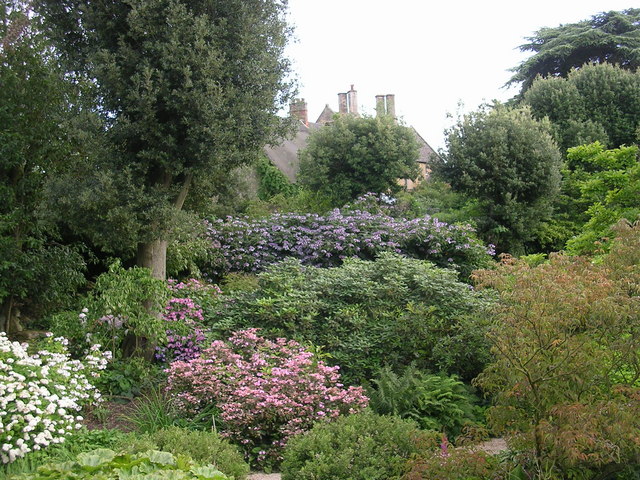
No. This surprises a significant number of visitors who arrive expecting to tour the house as well as the garden. The manor house is not open for general public visits. You will see it from the garden, and can enter the manor for the cafe, but there are no room tours or interior access beyond that.
Worth knowing before you go, not because it makes Hidcote less worth visiting (it doesn't), but because arriving with accurate expectations matters. The garden is the attraction. The house is context.
Visiting Hidcote Garden: practical information
Getting there and parking
Hidcote is in the hamlet of Hidcote Bartrim, around 2.75 miles northeast of Chipping Campden. The postcode for the entrance is GL55 6LR, but the SatNav warning from the National Trust is worth heeding: navigation systems sometimes direct drivers down a farm track before the correct entrance. If approaching from the B4081 from Chipping Campden, follow the brown National Trust signs rather than purely the SatNav.
Parking is free and on-site, with a mix of gravel and grass surfaces. Blue Badge parking is in the right-hand car park, nearest Visitor Reception. Electric vehicle charging points (11kw, eight points) are available near Visitor Reception. Campervans over 5 metres need to pre-book.
For anyone who'd rather walk: a scenic 4.5km route from Chipping Campden along parts of the Monarch's Way footpath takes roughly an hour, through rolling North Cotswolds countryside. Worth factoring in if you're spending a day in Chipping Campden.

Opening times and prices
Hidcote is open most days until November, then Friday, Saturday, and Sunday only through the winter months. Hours are generally 10am to 5pm with last entry at 4pm, though this can vary seasonally. Worth checking the National Trust website before travelling.
Adult admission with Gift Aid: around £20.90. Children (5 to 17 years): around £10. Under 5s: free. National Trust members: free. The price at the till may differ from those listed here. Confirm current pricing at nationaltrust.org.uk/hidcote before booking.
Booking in advance is no longer required. The National Trust removed the booking system and Hidcote now operates on a turn-up basis. On busy summer weekends the car park does fill up, so arriving reasonably early is sensible.
Dogs
Dogs are welcome at Hidcote on short, fixed leads. They can access most of the garden, with the exception of the Old Garden complex and the Manor House. Reviews note the garden is well-signed for where dogs are and are not permitted, and staff are welcoming.
Accessibility
The terrain at Hidcote is the main challenge: gravel and paved paths, uneven surfaces throughout much of the garden. A step-free route covers approximately one-third of the garden and is marked on the visitor map. Mobility scooters and a manual wheelchair are available to borrow, but must be pre-booked by calling 01386 438333. Accessible toilets are on-site.
How long to allow
Two to three hours is the standard estimate for a thorough visit to the garden. Keen gardeners typically take longer. If you are combining Hidcote with Kiftsgate Court Gardens (directly adjacent), allow a full day with time for lunch.
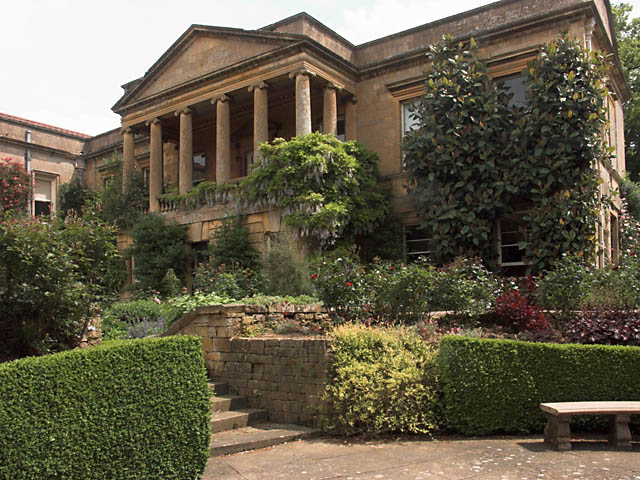
Hidcote and Kiftsgate Court Gardens: visiting both on the same day
Kiftsgate Court Gardens is immediately adjacent to Hidcote, under separate private ownership, and the two are regularly visited on the same day. They are very different in character: where Hidcote is structured and architectural, Kiftsgate is more informal and romantic, with one of the largest rose specimens in the country, Rosa filipes 'Kiftsgate', as its centrepiece.
Kiftsgate opens on selected afternoons through spring and summer (check kiftsgate.co.uk for current hours), and entry is charged separately. It is consistently less crowded than Hidcote. Reviews consistently note that visiting Kiftsgate in the afternoon, after Hidcote, works well: by that point Hidcote's morning coach parties have departed and the two gardens together fill a day comfortably without feeling rushed.
If you are specifically interested in the rose, June is the month to visit Kiftsgate.
Combining Hidcote with Chipping Campden and the North Cotswolds
Hidcote is less than 3 miles from Chipping Campden, making the two a natural combination. Chipping Campden has one of the finest High Streets in the Cotswolds, the Market Hall, the Woolstaplers Hall, and a run of independent shops and pubs along a long, curved street of honey-coloured stone. Worth at least an hour before or after the garden. Broadway is around 5 miles west of Chipping Campden and worth adding if you're making a day of it in the North Cotswolds. Snowshill is 4 miles from Broadway if you want to keep the National Trust theme running.
Frequently asked questions
What is Hidcote Manor Garden?
Hidcote Manor Garden is a 10.5-acre National Trust garden near Chipping Campden in Gloucestershire, created by Major Lawrence Johnston from 1907 onwards. It is structured as a series of outdoor rooms enclosed by hedges, each with distinct planting and character. It was the first garden taken on by the National Trust solely for the significance of its garden, in 1948.
Is Hidcote Manor house open to the public?
No. The manor house is not open for general public tours. Visitors can see the exterior from the garden and access the manor for the cafe, but there are no room tours or interior access. The garden is the attraction.
How long does it take to visit Hidcote garden?
Most visitors spend two to three hours. Garden enthusiasts typically take longer. If you are combining Hidcote with Kiftsgate Court Gardens next door, allow a full day.
When is the best time to visit Hidcote?
Late spring to early summer (May to July) is peak season for planting. For fewer crowds, weekdays are significantly quieter than weekends, and arriving mid-morning or mid-afternoon avoids the busiest coach tour windows. Autumn (October) is an underrated time: the structure of the garden is prominent, late perennials are still flowering, and visitor numbers drop considerably.
Are dogs allowed at Hidcote?
Yes, dogs are welcome on short, fixed leads in most areas of the garden. The exceptions are the Old Garden complex and the Manor House. The garden is well-signed for dog access and staff are welcoming to dogs.
Is Hidcote accessible for wheelchair users?
Partly. A step-free route covers approximately one-third of the garden. Much of the remaining garden has uneven gravel and paved paths. Mobility scooters and a manual wheelchair are available to borrow but must be pre-booked on 01386 438333.
Can you visit Hidcote and Kiftsgate Court Gardens on the same day?
Yes. Kiftsgate is immediately adjacent to Hidcote and the two are regularly visited together. They are under separate ownership and charge separately. Kiftsgate opens on selected afternoons. Check kiftsgate.co.uk for current hours. Combined with Hidcote, allow a full day.
Do you need to book in advance for Hidcote?
No. The National Trust removed the booking requirement and Hidcote now operates on a turn-up basis. On peak summer weekends the car park can fill up, so arriving reasonably early is sensible. National Trust members enter free.